You searched for "space phenomena"


4 space phenomena astronomy news items found


Astronomy-in-November-2025

Astronomy in November 2025


Wednesday, November 5, 2025 by

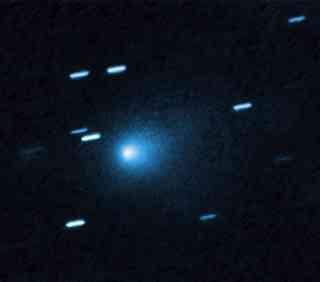
This month offers a bit of everything: a once-in-a-lifetime interstellar visitor passing through, a brilliant supermoon lighting up the sky, two bright comets fading out after their October glory, planets dancing in interesting ways, and even a couple of meteor showers (plus the promise of the auroras glimmering for those far north). It&rsq...


Supernova-light-echo-captured-by-Hubble

Supernova light echo captured by Hubble


Tuesday, June 17, 2025 by

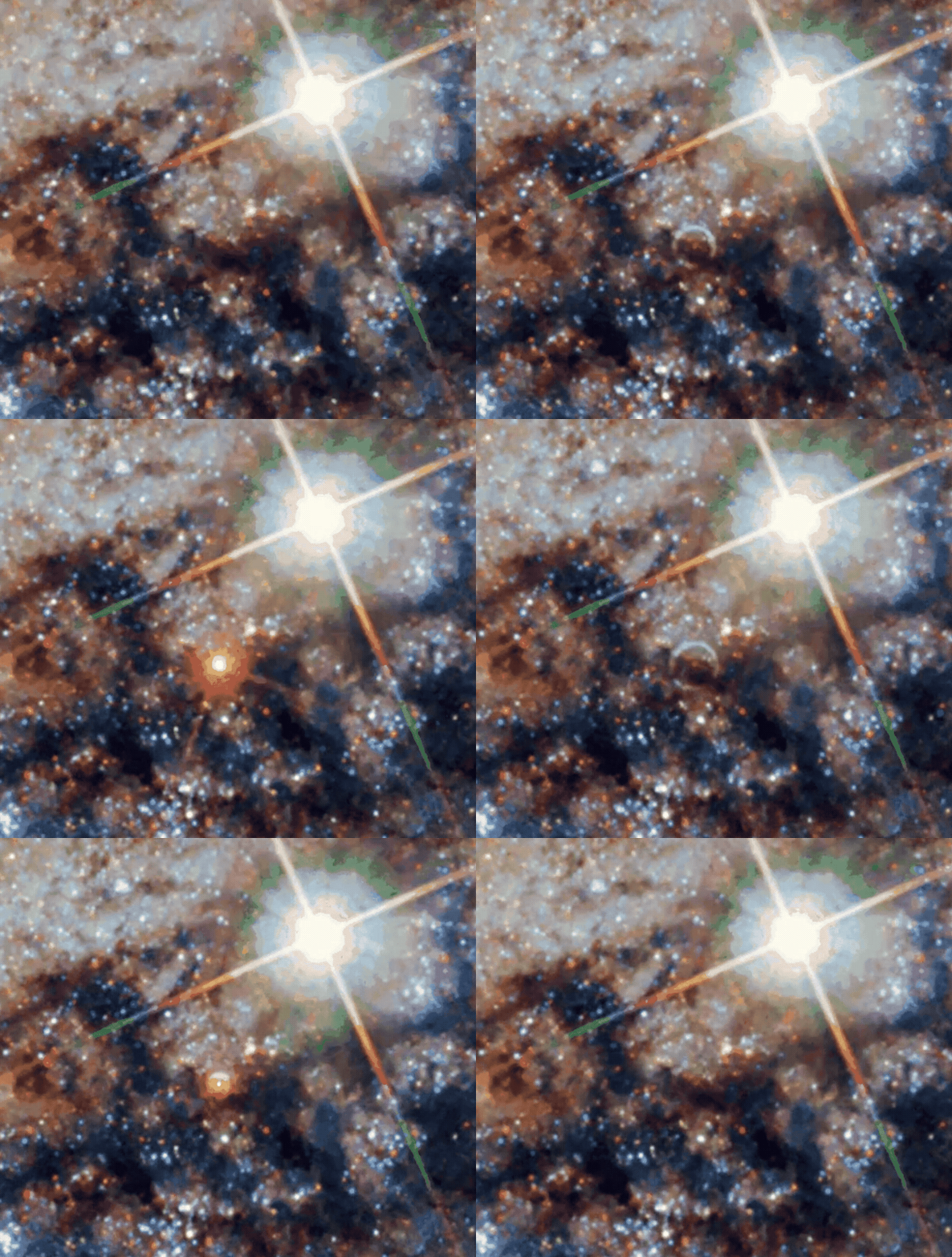
It’s not every day that a telescope 340 miles above Earth drops a view that feels more like science fiction than astrophysics, but when Hubble turned its attention toward a stellar explosion that happened ten million years ago, it gave the world something close to time travel. Not the shiny, whirring-machine kind. Something quieter. Slower. You’re not steppi...


Backyard-telescope-for-$600,000

Backyard telescope for $600,000


Saturday, February 22, 2025 by

If you’ve ever dreamed of having a $600,000 backyard telescope, the CDK1000 from PlaneWave Instruments is about as high-end as it gets. When you stand before something like the PlaneWave CDK1000, it’s not just about looking through a telescope, it’s about looking into the very fabric of the universe. At first glance, sure, the price tag could rival a l...


Sky-Watcher-Star-Adventurer-GTi

Sky-Watcher Star Adventurer GTi


Monday, June 20, 2022 by

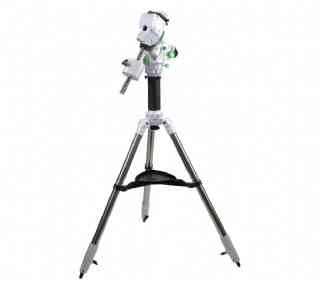
Sky-Watcher's Star Adventurer GTi equatorial mount offers full GoTo performance in a compact and portable design. Priced at $740.00, this mount caters to astrophotographers seeking a lightweight and versatile solution for deep space, widefield, and nightscape photography. Sky-Watcher Star Adventurer GTi The Star Adventurer GTi boasts an 11-pound payload capaci...


Astronomy Picture of the Day

2026-04-03
Caught in the Web: Visualization of a Black Hole Merger in the Tarantula Nebula
Caught in the Web: Visualization of a Black Hole Merger in the Tarantula Nebula - 2026-04-03 - Image by Carl Knox (NASA Astronomy Picture of the Day)
Image Credit: Carl Knox
How can we see what is invisible? Black holes are not easy to see in the dark cosmic night, but astronomers can find them by analyzing their gravitational effects on matter, light and spacetime. The featured image shows an illustration that combines a simulation of a black hole binary system in its final "death-dance" with an astrophotography image of the Tarantula Nebula in the background. Even though black holes don't emit light, they distort the path of light rays, acting like a gravitational lens. As a result, the nebula appears extremely distorted, forming Einstein rings and multiple images. Tarantula Nebula lies in the Large Magellanic Cloud, a dwarf galaxy that is one of the satellite galaxies of the Milky Way, 160,000 light-years away. That is more than 1,000 times closer than any of the binary black hole mergers detected so far. We'll probably never detect a merger so close to home!

Latest Video


AM7 Mount Replaces CGX-L


Recent Topics


Ghost in the dome
Started By moonbeam on 3/22/2026 7:53:39 AM
A shoutout to the talented women of astrophotography today!
Started By moonbeam on 3/8/2026 8:18:35 AM
Astrophotography and the cold, pro tips article
Started By moonbeam on 3/4/2026 3:49:38 PM
Why We Photograph the Cosmos and What It Teaches Us About Ourselves
Started By moonbeam on 2/19/2026 7:54:57 AM
ZWO AM7 Review
Started By moonbeam on 2/16/2026 2:38:12 PM
Classified Listings
Started By manfrednasa on 2/11/2026 3:14:57 PM
miniCam8 review plus more inside our February 2026 issue!
Started By moonbeam on 2/4/2026 9:01:24 AM
ZWO teases AM7 release!
Started By moonbeam on 1/26/2026 11:24:43 AM
Another Aurora!
Started By spazmagi on 1/19/2026 1:28:43 PM
StellarMate problems made me switch back to ASIAIR
Started By moonbeam on 1/12/2026 11:04:05 AM

Featured Stories


ASCOM Platform 7.1 Update 2 Released
ASCOM Platform 7.1 Update 2 Released Tuesday, February 10, 2026


Stay Updated

Sign up for our newsletter for the headlines delivered to you

SuccessFull SignUp


Get More Astronomy News →