You searched for "open source"


13 open source astronomy news items found


Planet-and-moon-image-stacking-gets-easier-with-LuckyStackWorker-7

Planet and moon image stacking gets easier with LuckyStackWorker 7


Wednesday, January 14, 2026 by

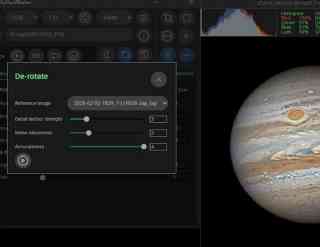
LuckyStackWorker - a free, open-source desktop application for astrophotographers that automates the post-processing (sharpening, denoising) of stacked solar system images (planets, Moon, Sun) captured with techniques like lucky imaging, has updated to a new release of version 7.0.0. The application has taken a noticeable step forward, not by reinventing planetary workf...


OpenAstro-AlpacaBridge-launches-and-why-it-matters

OpenAstro AlpacaBridge launches and why it matters


Tuesday, January 13, 2026 by

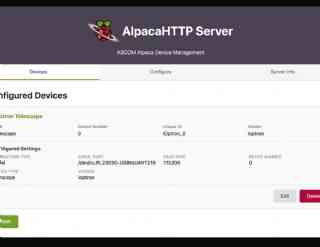
After spending decades in the field setting up mounts in the dark, chasing cables across frozen ground, and trying to make mismatched software talk to hardware it barely understands, I have learned to pay attention when someone tries to solve a real problem instead of adding another layer of noise. AlpacaBridge from OpenAstro is one of those efforts that comes from live...


Automatic-polar-alignment-for-telescopes-just-got-real

Automatic polar alignment for telescopes just got real


Monday, January 12, 2026 by

Polar alignment is a nuts-and-bolts procedure - an unglamorous but unavoidable step if we want precise tracking of the night sky with our telescopes. There’s nothing particularly elegant or mysterious about it. You’re simply aligning the polar axis (RA) of your mount as accurately as possible with the celestial pole of the planet you’re standing on...E...


New-harmonic-drive-mount-from-MLAstro:-The-SAL-33

New harmonic drive mount from MLAstro: The SAL-33


Wednesday, September 17, 2025 by

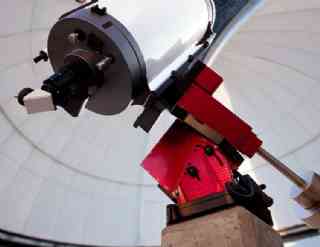
Astrophotography gear often comes from familiar big-name brands, so a new mount from a small solar-imaging company might raise some eyebrows. MLAstro, a Vietnam-based startup known for its cutting-edge spectroheliograph (narrowband solar imaging device), has taken a bold leap from capturing sunspots to tracking the entire night sky - I have one and it's am...


Solar-weather-forecast-AI-model-unveiled

Solar weather forecast AI model unveiled


Wednesday, August 20, 2025 by

IBM and NASA have introduced Surya, an artificial intelligence system designed to predict solar weather with unprecedented accuracy. Named after the Sanskrit word for the Sun, Surya is purported to be a major leap forward in the ability to safeguard technology and infrastructure from the volatile activity of our nearest star. Now available as an open-source model on Hug...


DIY-flat-panel

DIY flat panel


Thursday, August 14, 2025 by

Astrophotographers are constantly innovating to improve their imaging workflows, often creating custom tools that rival commercial products at a fraction of the cost. One clever example comes from a maker who modified a standard LED tracing panel to function as an ASCOM Alpaca-compatible flat panel calibrator. The result is a low-cost, smart device that can automate fla...


Open-source-software-from-NASA-released

Open source software from NASA released


Tuesday, July 22, 2025 by

NASA recently released its latest open Software Catalog, featuring over 1,200 downloadable software codes developed by agency engineers. These tools are designed to accelerate solutions that support the space economy and stimulate innovation across industries. The catalog is part of NASA’s broader effort to place advanced technologies — including software, i...


PiFinder-update-restores-Comets-menu-and-equipment-deletion-crashes

PiFinder update restores Comets menu and equipment deletion crashes


Thursday, June 19, 2025 by

PiFinder version 2.2.1 has been released, and while it's a small update, it fixes a couple of specific issues that were affecting some users. The biggest fix is the return of the Comets menu item, which had gone missing under the “Objects” section. That’s now back in place. This update also fixes several crash scenarios tied to the newer equipment ...


Siril-1.4-release-teasers

Siril 1.4 release teasers


Wednesday, December 25, 2024 by

Merry Christmas everyone! The eagerly anticipated release Siril 1.4 promises to bring a host of new features and enhancements. As avid users and astronomy enthusiasts await its arrival, the developers have provided a fun glimpse into what we can expect through a series of Christmas-themed teasers. A Sneak Peek into Siril 1.4 Features Siril 1.4 is set to introdu...


DIY-harmonic-mount-for-astrophotography

DIY harmonic mount for astrophotography


Tuesday, November 26, 2024 by

Astrophilos has released a video that introduces an innovative DIY harmonic mount designed to make astrophotography more affordable for enthusiasts on a budget. This new version, costing only $399, brings impressive advancements and highlights for those interested in building their own mount while saving money compared to commercial options. DIY harmonic mount for as...


Titan-Astro-SkyCamOne-HAT-for-Raspberry-Pi-5

Titan Astro SkyCamOne HAT for Raspberry Pi 5


Wednesday, September 18, 2024 by

Titan Astro, a young innovator in amateur astronomy technology, recently announced the launch of its groundbreaking SkyCamOne HAT for Raspberry Pi 5. This device combines the power of Raspberry Pi 5 with advanced capabilities, making professional-grade all sky cameras accessible to astronomers of all levels. Titan Astro SkyCamOne for Raspberry Pi 5: Revolutioniz...


Processing-planetary,-lunar-and-solar-images-with-LuckyStackWorker-6

Processing planetary, lunar and solar images with LuckyStackWorker 6


Sunday, September 15, 2024 by

Wilco Kasteleijn, a Dutch software engineer and astronomy enthusiast, is pleased to announce the release of s version 6, an open-source software designed for post-processing planetary, lunar, and solar image stacks. LuckyStackWorker v6 continues to build upon its predecessors' foundation, focusing on user experience improvements and enhanced functionality for tho...


Galaxy-visualization-project

Galaxy visualization project


Thursday, September 12, 2024 by

It was 1923 and Edwin Hubble (eh hum born not far from me), using the 100-inch Hooker Telescope at Mount Wilson Observatory, was able to resolve individual stars in the Andromeda Nebula (M31), including Cepheid variables. By measuring the period of these Cepheids, Hubble calculated their distance, proving conclusively that Andromeda was far outside the Milky Way, t...


Latest Video


AM7 Mount Replaces CGX-L


Recent Topics


Ghost in the dome
Started By moonbeam on 3/22/2026 7:53:39 AM
A shoutout to the talented women of astrophotography today!
Started By moonbeam on 3/8/2026 8:18:35 AM
Astrophotography and the cold, pro tips article
Started By moonbeam on 3/4/2026 3:49:38 PM
Why We Photograph the Cosmos and What It Teaches Us About Ourselves
Started By moonbeam on 2/19/2026 7:54:57 AM
ZWO AM7 Review
Started By moonbeam on 2/16/2026 2:38:12 PM
Classified Listings
Started By manfrednasa on 2/11/2026 3:14:57 PM
miniCam8 review plus more inside our February 2026 issue!
Started By moonbeam on 2/4/2026 9:01:24 AM
ZWO teases AM7 release!
Started By moonbeam on 1/26/2026 11:24:43 AM
Another Aurora!
Started By spazmagi on 1/19/2026 1:28:43 PM
StellarMate problems made me switch back to ASIAIR
Started By moonbeam on 1/12/2026 11:04:05 AM

Astronomy Picture of the Day

2026-04-05
NGC 3310: A Starburst Spiral Galaxy
NGC 3310: A Starburst Spiral Galaxy - 2026-04-05 - Image by AAO ITSO Office, 
Gemini Obs./AURA & 
T. A. Rector 
(U. Alaska Anchorage) (NASA Astronomy Picture of the Day)
Image Credit: AAO ITSO Office, Gemini Obs./AURA & T. A. Rector (U. Alaska Anchorage)
The party is still going on in spiral galaxy NGC 3310. Roughly 100 million years ago, NGC 3310 likely collided with a smaller galaxy causing the large spiral galaxy to light up with a tremendous burst of star formation. The changing gravity during the collision created density waves that compressed existing clouds of gas and triggered the star-forming party. The featured image from the Gemini North Telescope shows the galaxy in great detail, color-coded so that pink highlights gas while white and blue highlight stars. Some of the star clusters in the galaxy are quite young, indicating that starburst galaxies may remain in star-burst mode for quite some time. NGC 3310 spans about 50,000 light years, lies about 50 million light years away, and is visible with a small telescope towards the constellation of Great Bear Ursa Major.

Featured Stories


ASCOM Platform 7.1 Update 2 Released
ASCOM Platform 7.1 Update 2 Released Tuesday, February 10, 2026


Stay Updated

Sign up for our newsletter for the headlines delivered to you

SuccessFull SignUp


Get More Astronomy News →