You searched for "bortle scale"


4 bortle scale astronomy news items found


Dark-sky-astronomy-locations-guide

Dark sky astronomy locations guide


Friday, May 23, 2025 by

Finding a dark sky location for astronomy begins with understanding what makes a sky dark. A dark sky is one where artificial light is minimal or absent, allowing celestial objects to appear with clarity and contrast. This level of darkness isn’t judged by personal perception but by measured values. One of the main systems used is the Bortle Scale, which ranks sky...


Large-telescopes-vs-light-pollution

Large telescopes vs light pollution


Sunday, March 16, 2025 by

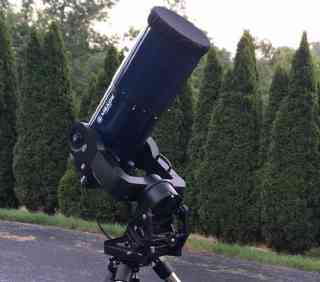
For amateur astronomers, bigger telescopes mean better views—plain and simple. While professional observatories have massive 10-meter mirrors, most of us are working with something in the 8" to 24" range, with some die-hard enthusiasts pushing up to 30" for visual observing. A 17" or 24" Dobsonian, for example, is a serious deep-sky machin...


Optolong-L-Para-filter

Optolong L-Para filter


Thursday, January 16, 2025 by

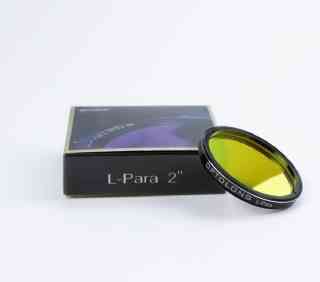
Optolong has introduced the L-Para (L-Parallels), a dual narrowband 10nm light pollution filter tailored to meet the demanding requirements of astrophotographers. With a full width at half maximum (FWHM) of 10nm for the OIII (500.7nm) and H-Alpha (656.3nm) emission lines, the filter achieves a transmittance exceeding 85% in systems with focal ratios of F2 and above. Thi...


The-Bortle-dark-sky-scale-explained

The Bortle dark-sky scale explained


Friday, September 13, 2024 by

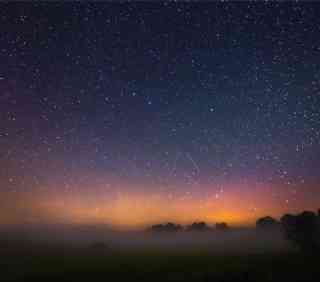
The Bortle Dark-Sky Scale, named after its creator John E. Bortle, is a nine-level numeric scale that measures the night sky's brightness and the visibility of celestial objects. Bortle, an experienced amateur astronomer, introduced this scale in 2001 to help fellow stargazers quantify the quality of their observing sites. The scale ranges from Class 1, representing...


Astronomy Picture of the Day

2026-04-04
Hello World
Hello World - 2026-04-04 - NASA Astronomy Picture of the Day
From pole to pole our fair planet is captured in this snapshot from space, an evocative image from a window of the Orion spacecraft Integrity. From the spacecraft's perspective the Sun is moving behind Earth's bright limb along the lower right. Africa and the Iberian peninsula are in view on the pale blue planet's surface, while aurorae crown Earth's south and north poles at top right and bottom left. Commander Reid Wiseman took the historic picture on Artemis II mission flight day 2 (April 2), after the completion of the planned translunar injection burn. That burn boosted the spacecraft out of Earth orbit, sending Integrity and crew on a trajectory that will take them around the Moon and back again. That's a journey humans last made over 50 years ago.

Latest Video


AM7 Mount Replaces CGX-L


Recent Topics


Ghost in the dome
Started By moonbeam on 3/22/2026 7:53:39 AM
A shoutout to the talented women of astrophotography today!
Started By moonbeam on 3/8/2026 8:18:35 AM
Astrophotography and the cold, pro tips article
Started By moonbeam on 3/4/2026 3:49:38 PM
Why We Photograph the Cosmos and What It Teaches Us About Ourselves
Started By moonbeam on 2/19/2026 7:54:57 AM
ZWO AM7 Review
Started By moonbeam on 2/16/2026 2:38:12 PM
Classified Listings
Started By manfrednasa on 2/11/2026 3:14:57 PM
miniCam8 review plus more inside our February 2026 issue!
Started By moonbeam on 2/4/2026 9:01:24 AM
ZWO teases AM7 release!
Started By moonbeam on 1/26/2026 11:24:43 AM
Another Aurora!
Started By spazmagi on 1/19/2026 1:28:43 PM
StellarMate problems made me switch back to ASIAIR
Started By moonbeam on 1/12/2026 11:04:05 AM

Featured Stories


ASCOM Platform 7.1 Update 2 Released
ASCOM Platform 7.1 Update 2 Released Tuesday, February 10, 2026


Stay Updated

Sign up for our newsletter for the headlines delivered to you

SuccessFull SignUp


Get More Astronomy News →