
| Founded | Employees | Social | Traffic |
|---|---|---|---|
| 1997 | -- | -- | -- |
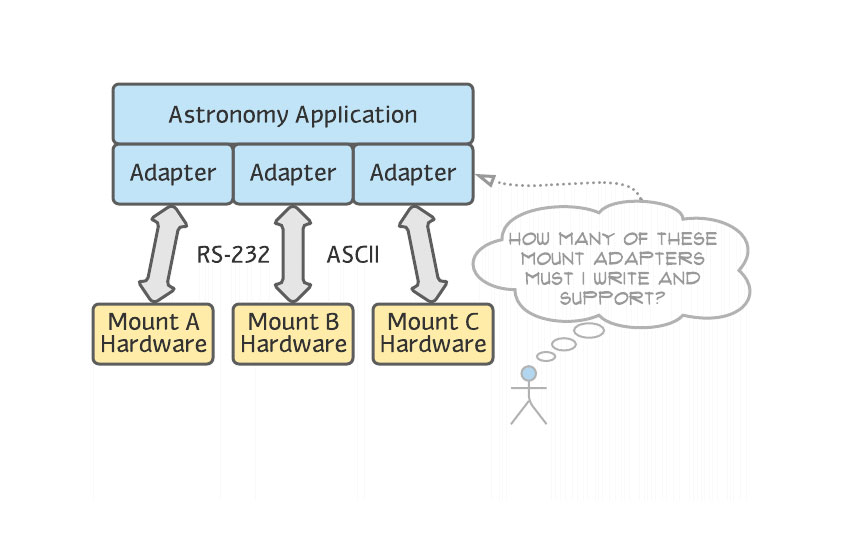
In the early days of computer-assisted astronomy, devices came with their own "computer control" (usually ASCII over RS-232).One such protocol was the so-called LX-200 standard, derived from the commands published by Meade Instruments Corporation for use with their Meade LX-200 series of telescopes. The LX-200 protocol was copied by other mount makers so their mounts would run with apps that spoke "LX200". But each mount maker eventually customized their mount's ASCII commands because their mounts had unique features, so these protocols diverged and became unique. Other high-end mounts had their own unique ASCII or TCP/IP protocols from the outset. A few kept their control protocol private and provided their own apps (software hand boxes or planetariums) completely locking out others from controlling the mount.
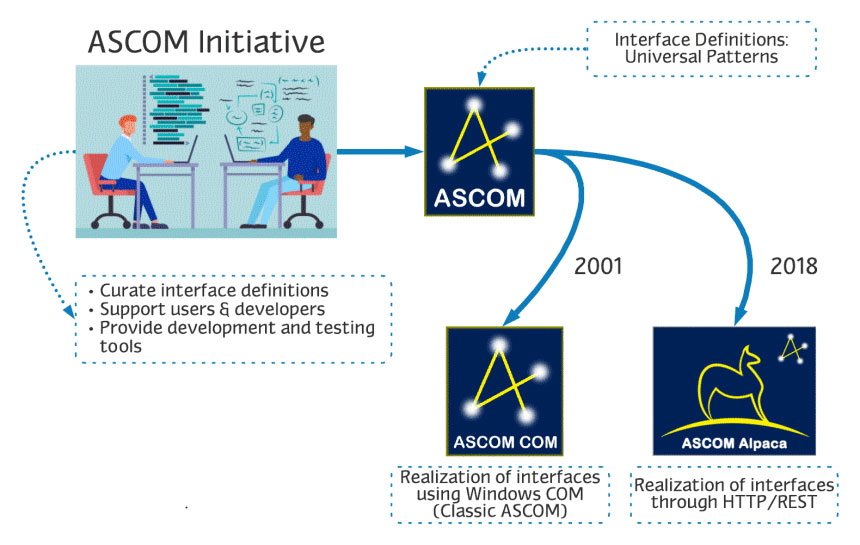
ASCOM is the general name for enabling technology based on universal connectivity between astronomy apps/programs and the devices they use. ASCOM has thus opened up astronomy software innovation by eliminating the need to write special code for each device. ASCOM itself represents the definitions or patterns which are called Interfaces. These establish the universal language used between apps and devices.
ASCOM COM is the classic ASCOM which uses the COM service on Windows to provide communication between apps and devices. ASCOM Alpaca is the newer ASCOM which uses network communication between apps and devices. Alpaca works on Linux, MacOS, Windows, and even on embedded controllers. ASCOM COM is limited to Windows.
ASCOM has undergone a rapid transformation from Windows-only to a universal technology. Classic ASCOM has been a fundamental cornerstone of astronomy innovation on the Windows platform. Now we have ASCOM Alpaca, a new way to accomplish the same things but via network connectivity and on any platform, even embedded controllers. Both Alpaca and Classic ASCOM seamlessly operate in the background of many of the products you are currently using. Both provide the same universal language so that any astronomy app/program can connect to any astronomy device which complies with the ASCOM standards. ASCOM has become essential through simplification and standardization. Without ASCOM we would not have seen the explosive growth and innovation we have experienced in the field over the last 20 years.