You searched for "tec cooling"


4 tec cooling astronomy news items found


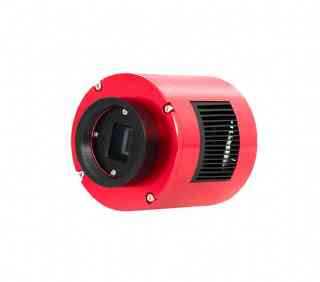
ASI585MM-Pro-monochrome-camera

ASI585MM Pro monochrome camera


Friday, March 21, 2025 by

ZWO has quietly launched a powerful new tool for serious astrophotographers: the ASI585MM Pro, a mono version of their popular ASI585 series with professional-grade cooling and imaging performance. While it’s packaged alongside the older ASI585MC Pro (the color version), make no mistake, the MM Pro is the real news here. This marks the first time ZWO has introd...


Andor-CB2-sCMOS-camera

Andor CB2 sCMOS camera


Saturday, February 8, 2025 by

Oxford Instruments, the provider of high-technology products and services for research and industry, has announced the launch of a high-resolution, low-noise, back-illuminated sCMOS camera, further strengthening its broad portfolio of cameras for low-light imaging in Life Sciences, Physical Sciences, and Industrial applications. The Andor CB2 24B back-illuminated CMO...


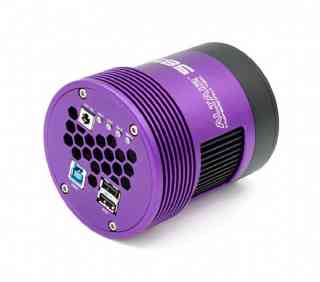
Altair-585M-Mono-TEC-cooled-camera

Altair 585M Mono TEC cooled camera


Wednesday, December 18, 2024 by

Altair Astro has unveiled the Altair 585M Mono Cooled Camera, designed for amateur astronomers seeking a solution for both solar system and deep-sky imaging. Equipped with the latest Sony Starvis 2 back-illuminated sensor, this camera delivers high sensitivity, no amp glow, and a peak quantum efficiency of approximately 91%. The sensor offers enhanced dynamic range and ...


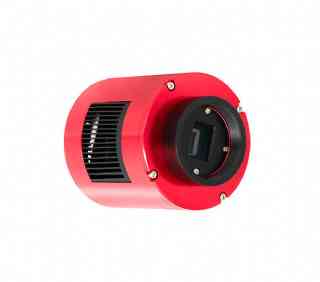
The-ZWO-ASI585MC-Pro-lands-with-a-review-from-Trevor-Jones

The ZWO ASI585MC Pro lands with a review from Trevor Jones


Tuesday, June 11, 2024 by

The ZWO ASI585MC Pro is the latest addition to ZWO's line of deep-sky cameras. It's built around a 4K Sony CMOS sensor with a 1/1.2″ format and 2.9μm pixels, delivering a resolution of 3840x2160 (8.29MP). This camera offers high sensitivity and a fast frame rate, reaching 47 frames per second at full resolution. ZWO ASI585MC Pro, deep-sky camera feat...


Latest Video


AM7 Mount Replaces CGX-L


Recent Topics


Ghost in the dome
Started By moonbeam on 3/22/2026 7:53:39 AM
A shoutout to the talented women of astrophotography today!
Started By moonbeam on 3/8/2026 8:18:35 AM
Astrophotography and the cold, pro tips article
Started By moonbeam on 3/4/2026 3:49:38 PM
Why We Photograph the Cosmos and What It Teaches Us About Ourselves
Started By moonbeam on 2/19/2026 7:54:57 AM
ZWO AM7 Review
Started By moonbeam on 2/16/2026 2:38:12 PM
Classified Listings
Started By manfrednasa on 2/11/2026 3:14:57 PM
miniCam8 review plus more inside our February 2026 issue!
Started By moonbeam on 2/4/2026 9:01:24 AM
ZWO teases AM7 release!
Started By moonbeam on 1/26/2026 11:24:43 AM
Another Aurora!
Started By spazmagi on 1/19/2026 1:28:43 PM
StellarMate problems made me switch back to ASIAIR
Started By moonbeam on 1/12/2026 11:04:05 AM

Astronomy Picture of the Day

2026-04-05
NGC 3310: A Starburst Spiral Galaxy
NGC 3310: A Starburst Spiral Galaxy - 2026-04-05 - Image by AAO ITSO Office, 
Gemini Obs./AURA & 
T. A. Rector 
(U. Alaska Anchorage) (NASA Astronomy Picture of the Day)
Image Credit: AAO ITSO Office, Gemini Obs./AURA & T. A. Rector (U. Alaska Anchorage)
The party is still going on in spiral galaxy NGC 3310. Roughly 100 million years ago, NGC 3310 likely collided with a smaller galaxy causing the large spiral galaxy to light up with a tremendous burst of star formation. The changing gravity during the collision created density waves that compressed existing clouds of gas and triggered the star-forming party. The featured image from the Gemini North Telescope shows the galaxy in great detail, color-coded so that pink highlights gas while white and blue highlight stars. Some of the star clusters in the galaxy are quite young, indicating that starburst galaxies may remain in star-burst mode for quite some time. NGC 3310 spans about 50,000 light years, lies about 50 million light years away, and is visible with a small telescope towards the constellation of Great Bear Ursa Major.

Featured Stories


ASCOM Platform 7.1 Update 2 Released
ASCOM Platform 7.1 Update 2 Released Tuesday, February 10, 2026


Stay Updated

Sign up for our newsletter for the headlines delivered to you

SuccessFull SignUp


Get More Astronomy News →