You searched for "high frame rate"


8 high frame rate astronomy news items found


Planet-and-moon-image-stacking-gets-easier-with-LuckyStackWorker-7

Planet and moon image stacking gets easier with LuckyStackWorker 7


Wednesday, January 14, 2026 by

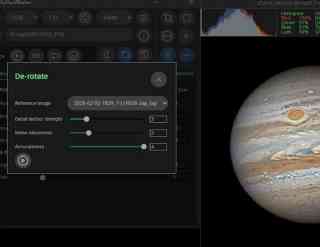
LuckyStackWorker - a free, open-source desktop application for astrophotographers that automates the post-processing (sharpening, denoising) of stacked solar system images (planets, Moon, Sun) captured with techniques like lucky imaging, has updated to a new release of version 7.0.0. The application has taken a noticeable step forward, not by reinventing planetary workf...


Choosing-the-right-astrophotography-camera

Choosing the right astrophotography camera


Friday, August 15, 2025 by

Astrophotography once relied entirely on film, a method plagued by low sensitivity, challenging exposures, and highly limited post-processing capabilities. The emergence of CCD sensors marked a massive improvement, offering lower noise and enhanced image quality. However, the introduction of CMOS sensors revolutionized the field even further. CMOS technology has rapidly...


ASI662MM-astronomy-camera

ASI662MM astronomy camera


Friday, July 18, 2025 by

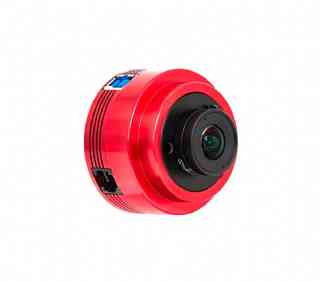
The ASI662MM and ASI662MC planetary cameras from ZWO are part of a new generation of affordable, high-performance astronomy cameras designed for capturing stunning images of celestial objects. Both cameras use the Sony IMX662 rolling shutter CMOS sensor, known for its excellent sensitivity, low read noise, and fast frame rates. They are ideal for planetary imaging, luna...


Cheap-astrophotography-camera-the-OGMA-GP678C

Cheap astrophotography camera the OGMA GP678C


Thursday, March 6, 2025 by

The OGMA GP678C Guide/Planetary Color Astronomy Camera, featuring the Sony IMX678 sensor, caught my attention for its versatility and affordability. At just $259.00, this camera delivers impressive performance for both planetary and deep-sky imaging, making it a valuable addition to any backyard observatory setup. Let’s take a dive into the specs, features, and re...


High-magnification-astrophotography

High-magnification astrophotography


Tuesday, February 11, 2025 by

Long focal length telescopes bring distant deep sky objects closer, revealing fine details that are impossible to capture with shorter focal lengths. While astrophotography with these telescopes does require more precision in tracking and guiding, the benefits can far outweigh the challenges. The ability to see intricate structures in nebulae, fine details in galaxies, ...


Player-One-Astronomy-camera-lineup

Player One Astronomy camera lineup


Monday, February 10, 2025 by

Whether you're imaging planets, deep-space nebulae, or the Sun, having a camera designed for your specific needs can make all the difference. One company that has been making waves in the astrophotography community is Player One Astronomy. Their lineup of cameras covers everything from guiding and planetary imaging to cooled deep-sky and solar photography. In this g...


Best-solar-cameras-for-F7-telescopes

Best solar cameras for F7 telescopes


Monday, February 10, 2025 by

Solar imaging cameras need to meet specific requirements to work well with different telescopes. Unlike deep-sky imaging, where long exposures are the norm, solar imaging requires high-speed cameras capable of capturing many frames per second. This is because the atmosphere is constantly shifting, and capturing a large number of frames allows for stacking the best image...


The-ZWO-ASI585MC-Pro-lands-with-a-review-from-Trevor-Jones

The ZWO ASI585MC Pro lands with a review from Trevor Jones


Tuesday, June 11, 2024 by

The ZWO ASI585MC Pro is the latest addition to ZWO's line of deep-sky cameras. It's built around a 4K Sony CMOS sensor with a 1/1.2″ format and 2.9μm pixels, delivering a resolution of 3840x2160 (8.29MP). This camera offers high sensitivity and a fast frame rate, reaching 47 frames per second at full resolution. ZWO ASI585MC Pro, deep-sky camera feat...


Latest Video


AM7 Mount Replaces CGX-L


Recent Topics


Ghost in the dome
Started By moonbeam on 3/22/2026 7:53:39 AM
A shoutout to the talented women of astrophotography today!
Started By moonbeam on 3/8/2026 8:18:35 AM
Astrophotography and the cold, pro tips article
Started By moonbeam on 3/4/2026 3:49:38 PM
Why We Photograph the Cosmos and What It Teaches Us About Ourselves
Started By moonbeam on 2/19/2026 7:54:57 AM
ZWO AM7 Review
Started By moonbeam on 2/16/2026 2:38:12 PM
Classified Listings
Started By manfrednasa on 2/11/2026 3:14:57 PM
miniCam8 review plus more inside our February 2026 issue!
Started By moonbeam on 2/4/2026 9:01:24 AM
ZWO teases AM7 release!
Started By moonbeam on 1/26/2026 11:24:43 AM
Another Aurora!
Started By spazmagi on 1/19/2026 1:28:43 PM
StellarMate problems made me switch back to ASIAIR
Started By moonbeam on 1/12/2026 11:04:05 AM

Astronomy Picture of the Day

2026-04-05
NGC 3310: A Starburst Spiral Galaxy
NGC 3310: A Starburst Spiral Galaxy - 2026-04-05 - Image by AAO ITSO Office, 
Gemini Obs./AURA & 
T. A. Rector 
(U. Alaska Anchorage) (NASA Astronomy Picture of the Day)
Image Credit: AAO ITSO Office, Gemini Obs./AURA & T. A. Rector (U. Alaska Anchorage)
The party is still going on in spiral galaxy NGC 3310. Roughly 100 million years ago, NGC 3310 likely collided with a smaller galaxy causing the large spiral galaxy to light up with a tremendous burst of star formation. The changing gravity during the collision created density waves that compressed existing clouds of gas and triggered the star-forming party. The featured image from the Gemini North Telescope shows the galaxy in great detail, color-coded so that pink highlights gas while white and blue highlight stars. Some of the star clusters in the galaxy are quite young, indicating that starburst galaxies may remain in star-burst mode for quite some time. NGC 3310 spans about 50,000 light years, lies about 50 million light years away, and is visible with a small telescope towards the constellation of Great Bear Ursa Major.

Featured Stories


ASCOM Platform 7.1 Update 2 Released
ASCOM Platform 7.1 Update 2 Released Tuesday, February 10, 2026


Stay Updated

Sign up for our newsletter for the headlines delivered to you

SuccessFull SignUp


Get More Astronomy News →