You searched for "dew formation"


5 dew formation astronomy news items found


New-dew-heater-tailored-for-StarSense-Explorer

New dew heater tailored for StarSense Explorer


Friday, October 3, 2025 by

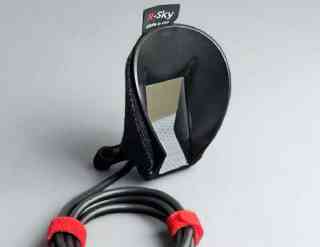
Astronomy equipment manufacturer R-Sky Astro Instruments has released a new accessory designed specifically for Celestron’s StarSense Explorer smartphone dock. The product is a dew heater that helps keep the dock’s alignment mirror free of condensation, a common problem during nighttime observations. By focusing on one of the most frequent issues faced by...


ZWO-latest-product-releases

ZWO latest product releases


Friday, May 30, 2025 by

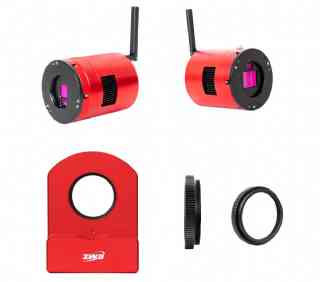
ZWO continues to expand its lineup of astrophotography gear with a series of new releases aimed at making imaging more efficient, compact, and user-friendly. From all-in-one wireless cameras to precision motorized rotators and essential adapter rings, these new tools are designed to simplify workflows while delivering high-end performance for both seasoned astrophotogra...


Pegasus-Astro-DewMaster-2-Controller

Pegasus Astro DewMaster 2 Controller


Tuesday, January 28, 2025 by

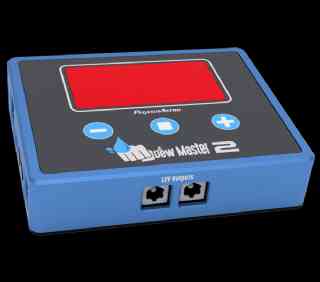
The DewMaster2 from Pegasus Astro is a versatile device designed to manage dew heaters for telescopes and other optical equipment. It supports up to five outputs with individually adjustable power levels, allowing precise control to prevent dew formation. Each channel is protected against overcurrent, ensuring safe operation during extended use. The unit features a robu...


SQA85-super-quintuplet-astrograph-released-by-Askar

SQA85 super quintuplet astrograph released by Askar


Monday, October 14, 2024 by

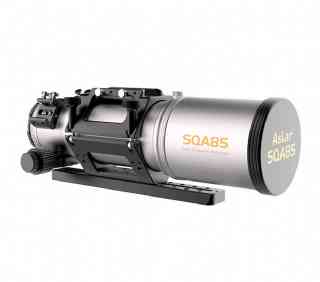
The new SQA85 by Askar is an 85mm aperture quintuplet Petzval astrograph designed for users who demand exceptional clarity, ease of use, and versatility. Featuring high-end SD glass and a fully integrated Petzval optical system, the SQA85 offers an unrivaled level of precision for full-frame imaging without the need for additional flatteners. With a focal l...


Dew-heater-battery-options:-Fight-the-fog!

Dew heater battery options: Fight the fog!


Friday, September 13, 2024 by

As an amateur astronomer, there are few things more frustrating than waking up after a long night of unattended astrophotography to find your telescope (or guide scope) lenses covered in dew. It's like the universe is playing a cruel joke on you. You spend hours meticulously setting up your equipment, aligning your telescope, and capturing images of distant galaxies...


Latest Video


AM7 Mount Replaces CGX-L


Recent Topics


Ghost in the dome
Started By moonbeam on 3/22/2026 7:53:39 AM
A shoutout to the talented women of astrophotography today!
Started By moonbeam on 3/8/2026 8:18:35 AM
Astrophotography and the cold, pro tips article
Started By moonbeam on 3/4/2026 3:49:38 PM
Why We Photograph the Cosmos and What It Teaches Us About Ourselves
Started By moonbeam on 2/19/2026 7:54:57 AM
ZWO AM7 Review
Started By moonbeam on 2/16/2026 2:38:12 PM
Classified Listings
Started By manfrednasa on 2/11/2026 3:14:57 PM
miniCam8 review plus more inside our February 2026 issue!
Started By moonbeam on 2/4/2026 9:01:24 AM
ZWO teases AM7 release!
Started By moonbeam on 1/26/2026 11:24:43 AM
Another Aurora!
Started By spazmagi on 1/19/2026 1:28:43 PM
StellarMate problems made me switch back to ASIAIR
Started By moonbeam on 1/12/2026 11:04:05 AM

Astronomy Picture of the Day

2026-04-05
NGC 3310: A Starburst Spiral Galaxy
NGC 3310: A Starburst Spiral Galaxy - 2026-04-05 - Image by AAO ITSO Office, 
Gemini Obs./AURA & 
T. A. Rector 
(U. Alaska Anchorage) (NASA Astronomy Picture of the Day)
Image Credit: AAO ITSO Office, Gemini Obs./AURA & T. A. Rector (U. Alaska Anchorage)
The party is still going on in spiral galaxy NGC 3310. Roughly 100 million years ago, NGC 3310 likely collided with a smaller galaxy causing the large spiral galaxy to light up with a tremendous burst of star formation. The changing gravity during the collision created density waves that compressed existing clouds of gas and triggered the star-forming party. The featured image from the Gemini North Telescope shows the galaxy in great detail, color-coded so that pink highlights gas while white and blue highlight stars. Some of the star clusters in the galaxy are quite young, indicating that starburst galaxies may remain in star-burst mode for quite some time. NGC 3310 spans about 50,000 light years, lies about 50 million light years away, and is visible with a small telescope towards the constellation of Great Bear Ursa Major.

Featured Stories


ASCOM Platform 7.1 Update 2 Released
ASCOM Platform 7.1 Update 2 Released Tuesday, February 10, 2026


Stay Updated

Sign up for our newsletter for the headlines delivered to you

SuccessFull SignUp


Get More Astronomy News →