

Telescopes
Unistellar Odyssey Pro vs ZWO Seestar
Wednesday, December 18, 2024

John A. Read, astronomer and host of Learn to Stargaze on YouTube, recently shared an in-depth look at the Unistellar Odyssey Pro, a telescope designed for immersive stargazing and astrophotography experiences. In his video, Read explored the telescope’s key features, tested its performance, and directly compared it to the ZWO Seestar, a leading competitor in the automated telescope market.
How does it stack up? The Unistellar Odyssey Pro vs ZWO Seestar when it comes to smart telescopes in 2024.
The Unistellar Odyssey Pro, a successor to the EV Scope, is built with an emphasis on ease of use and sharing astronomy with others. Read, who previously tested the EV Scope at the Analog Astronaut Conference in 2022, praised Unistellar’s focus on creating a memorable observational experience for star parties and public events. Equipped with an 85mm aperture, the Odyssey Pro collects nearly three times as much light as the Seestar's 50mm aperture, promising better resolution and the ability to capture finer details in less time. This advantage also positions it as a more versatile option for planetary imaging, an area where the Seestar has limitations.
Unistellar Odyssey Pro ScopeTrader Score
Our Take
The Unistellar Odyssey Pro offers a user-friendly, portable, and automated stargazing experience, making it a great option for beginners and urban observers. Key drawbacks include its high price, reliance on app-based controls, limited manual operation, and battery dependence. While it excels at real-time stacking and light pollution reduction, it lacks the advanced customization required for serious astrophotography. Compared to traditional telescopes, it’s pricier but more accessible, and while it outperforms the ZWO Seestar in features, it comes at a higher cost. Overall, the Odyssey Pro is a good value for those prioritizing simplicity and convenience, but experienced astrophotographers may find better value in a traditional rig.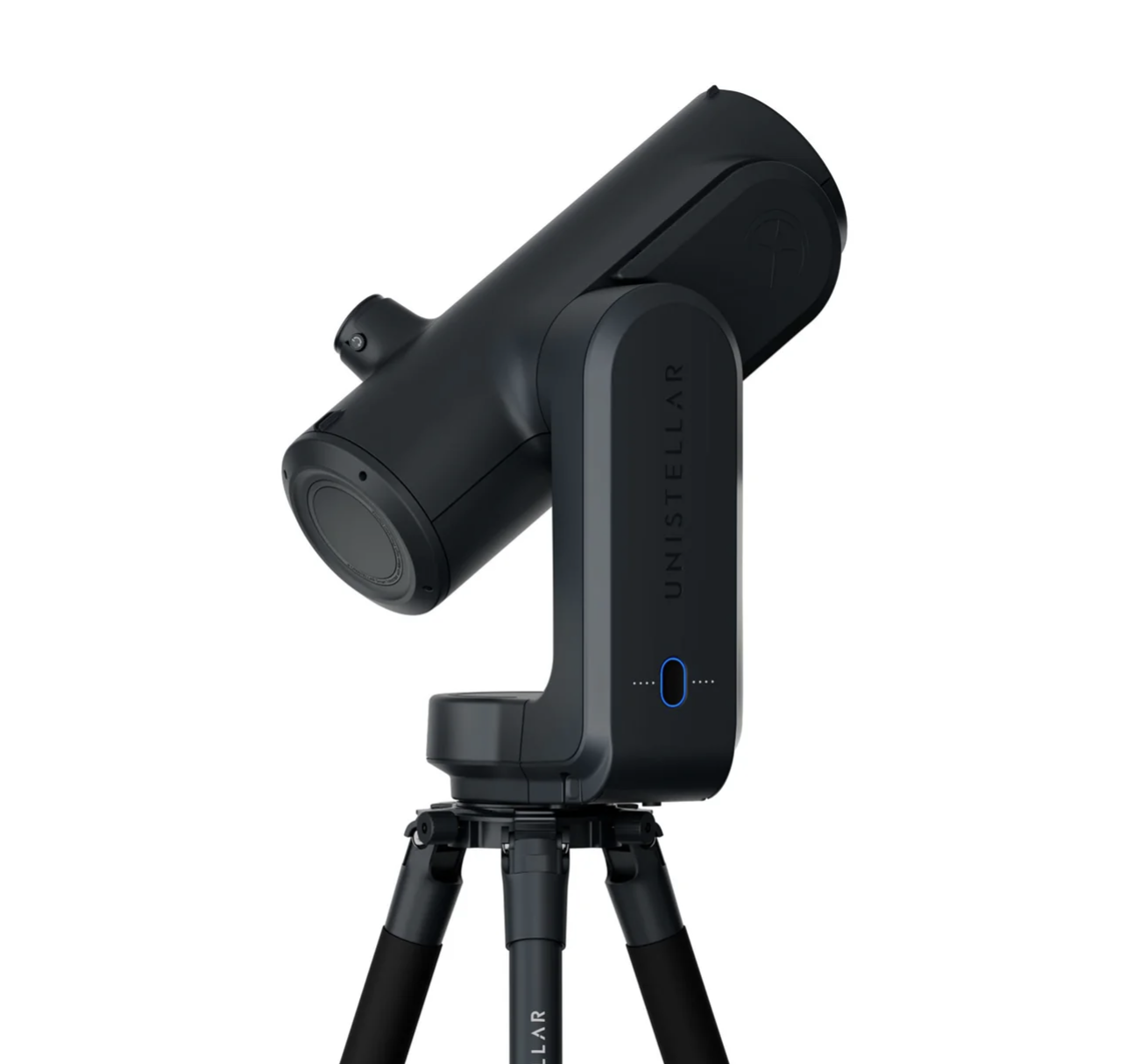
Highs
- Urban stargazing
- Beginner-friendly setup
- Real-time image stacking
- Portable and compact design
- Educational use
- Wireless control
- Hands-free star tracking
- Lightweight astrophotography
Lows
- High price point
- Reliance on app and Wi-Fi
- Limited manual control
- Short battery life
- Lack of raw file support for astrophotography
- Minimal customization for advanced users
- Limited upgrade options
- Higher cost compared to similar smart scopes
Where To Buy
The Odyssey Pro’s app integration
In his unboxing and setup, Read noted the high-quality packaging and detailed instructions, which he humorously admitted were necessary after initial difficulties opening the box. The telescope’s backpack was another highlight, designed for portability and convenience, and capable of accommodating additional accessories and even Read’s own 110 Things to See with a Telescope book.
During testing, Read appreciated the Odyssey Pro’s smooth app integration. Using the Unistellar app, the telescope aligned with celestial objects like the Sun and Jupiter with minimal input. The Odyssey's smart solar filter impressed him, allowing detailed views of sunspots and easy image stacking for enhanced clarity. However, Read cautioned users to allow the telescope time to adjust to ambient temperatures for optimal performance—a lesson he learned during an initial session where temperature differences affected image quality.
Side-by-side comparison of imaging capabilities under identical conditions
In a side-by-side comparison with the Seestar at the ABY Ridge Observatory in Nova Scotia, Read evaluated both telescopes’ imaging capabilities under identical conditions. While the Odyssey Pro excelled in light-gathering power and resolution, its higher weight (8.8 lbs compared to the Seestar’s 6 lbs) and price point were notable factors. Read emphasized that the Odyssey Pro targets a different audience: those willing to invest in a premium, user-friendly telescope that rivals traditional astrophotography rigs in cost and capability.
Drawbacks of the Odyssey Pro
Despite the Odyssey Pro’s strengths, Read acknowledged a few drawbacks. The heavier tripod, while adding stability, may pose portability challenges for some users. Additionally, the higher price—comparable to an entry-level deep-sky astrophotography setup with separate components—could deter budget-conscious buyers. For those new to astrophotography or seeking a more affordable option, he recommended the Seestar, which offers competitive imaging performance at a lower cost.
Ultimately, Read described the Unistellar Odyssey Pro as an exceptional telescope for its intended purpose: providing a seamless, high-quality stargazing experience that combines advanced technology with accessibility. While he praised its performance and features, he stopped short of declaring it definitively better than the Seestar, emphasizing that the best choice depends on individual needs, budget, and intended use.
For astronomy enthusiasts and public outreach advocates seeking a powerful, all-in-one telescope, the Unistellar Odyssey Pro stands out as a compelling option. However, for casual stargazers or those with limited budgets, the ZWO Seestar remains a strong contender.
Unistellar Odyssey Pro: Is It REALLY Better Than The Seestar?


| Founded | Employees | Social | Traffic |
|---|---|---|---|
| 2015 | 11-50 | -- | -- |
Unistellar is a pioneering company revolutionizing amateur astronomy with its innovative smart telescopes.
View more about UNISTELLAR