Astronomy equipment at NEAF 2026
NEAF has come and gone, another year in the books where astronomy enthusiasts and manufacturers from all over the world end up in the same place for a couple of very full days. If you’re not familiar with it, NEAF stands for the Northeast Astronomy Forum and Space Expo, and it’s really the place to be if you want to see what’s coming next before it officially lands in the market.
I always enjoy what comes out of it, but I’d be lying if I said I don’t start thinking about where all of this is headed. There’s no question the gear keeps getting better, smarter, and easier to use. That’s a good thing. But at some point you start to wonder what happens if everything gets so automated and AI-driven that the experience itself changes. I can’t help but think about a future where amateur astronomy turns into something like a house astro cam bolted to your roof, quietly running all night while you check images from your phone somewhere else. You can explore the sky from anywhere, sure, but you have to ask what gets lost along the way.
No more processing. No more guiding. No more polar alignment. No more wrestling with cables in the dark or chasing down that one setting you forgot to change. You almost have to laugh a little, because for a lot of us, that struggle is part of the whole thing. It’s not just about the final image. It’s about being out there, figuring it out, earning it one clear night at a time.
And I have to believe the manufacturers know this too. They’re all walking that fine line of how much is too much. Because if everything becomes completely hands off, fully automated, and done for you, they risk painting themselves into a corner where there’s nothing left to improve, nothing left to sell, and maybe not much left for the user to actually do. I’m just “pie in the skying” a little here -but tell me you haven’t had that same thought..
So this year’s show had a little of everything. There were serious upgrades, a few genuinely useful new ideas, some early teasers, and the usual signs that the smart telescope market is still growing up. What stood out most to me was not just new hardware. It was the steady move toward more practical systems. Better cable management. Better cooling. Better support for imaging. Better automation. Better use of small form factors. That is the kind of progress that matters when you are the one hauling gear into the yard, setting up in the dark, and hoping the clouds stay away long enough to justify the effort.
All the usual folks were there, Sky-Watcher, Drawf Labs, 10Micron, Takahashi, Astro-Physics, ZWO, Celestron, ToupTek, Tele Vue, Vaoinis, and many others -somewhere noth of 120 exibitors.
So who brought the updates to astronomy equipment at NEAF 2026?
Sky-Watcher
Sky-Watcher had one of the fuller collections of updates. The revised HQ5 R mount looks like a sensible modernization of a familiar workhorse. Built in Wi Fi, belt drive, cleaner cable management, and improved ergonomics are the kinds of changes that do not sound flashy in a brochure but matter a great deal in real use. Their new Skymax 200 also caught my attention. I have a soft spot for slower optical systems when they are done for a reason, and this one seems aimed at people who want both visual use and deep sky imaging. The cooling fan, improved thermal management, full frame support, and the no shift focusing approach all point to a company trying to make a traditionally specialized design more useful in the field.
The larger HelioStar 100 solar scope also looks like a meaningful step up for solar observers and imagers. Solar work is unforgiving. Small compromises show up fast. A larger blocking filter, more light gathering, and better support for larger sensors all make sense. Sky Watcher also refreshed its refractor lines, with the Esprit EDX and related updates, plus a new 70 millimeter model that appears designed with modern imaging requirements in mind.
Celestron and PrimaLuceLab
Celestron and PrimaLuceLab showed one of the more practical ideas at the event. Their CPC Deluxe powered by PrimaLuceLab concept is built around a simple reality. Many people already own CPC systems and would like to push them further into imaging without turning them into a science project. Using a rotator and focusing hardware to make deep sky astrophotography more realistic on that platform is the kind of thinking I respect. It does not ask users to throw away what they have. It asks how to make existing gear more capable.
PrimaLuceLab also showed its Saturn mount, which is one of the more interesting pieces of engineering at the show. It is still early, and it is fair to say it is not yet a fully settled commercial product, but the concept is strong. Fast slewing, weather resistance, dual encoders, and alt az plus equatorial flexibility all point toward a mount designed for demanding applications. It is not aimed at the casual backyard user first. Still, good ideas often start at the high end and work their way down.
Takahashi
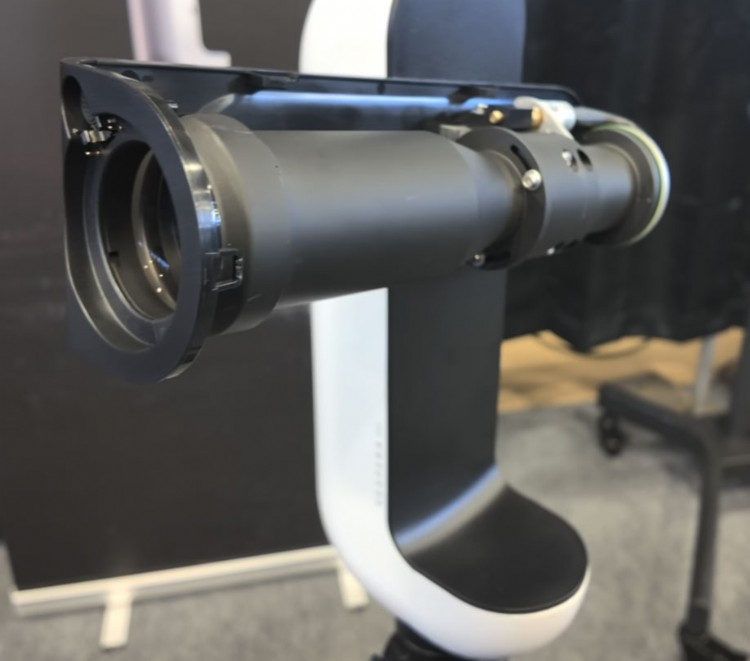
Takahashi introduced two instruments that will get the attention of serious refractor users. The redesigned FSQ 80 is not just a cosmetic refresh. It appears to be a full rethink intended to better match modern cameras with smaller pixels. That is exactly what a company like Takahashi should be doing. Optical designs that were once more than good enough can start to show their age when sensors change. The new FCT 114D seems aimed more toward visual observers who want premium performance in a smaller and more manageable package. That makes sense too. Not every good telescope has to be built around imaging.
Vaonis
Vaonis brought two new smart telescopes, the Vespera 3 and the Vespera Pro 2. These updates seem focused on the things owners actually notice over time. Better battery life, more memory, better image sharpness, improved signal in difficult parts of the spectrum, and USB C transfer are not glamorous talking points, but they are honest ones. They tell me the company is listening to use cases, not just marketing language.
DwarfLab
DwarfLab did not bring a finished new instrument, but the company did make it clear that a larger and more capable smart telescope is on the way. That matters because the first generation of smart scopes proved the concept. The next step is improving aperture, focal length, and sensor quality without making the system harder to live with.
ZWO
ZWO did not show a finished new Seestar at the booth much to the disapoinment of many, but the conversation around the future S50 Pro and other larger models was enough to tell us the line is far from finished. The smart telescope category is no longer a novelty. It is becoming a real product class. The challenge now is keeping these systems simple enough for beginners while making them capable enough that experienced observers do not outgrow them in six months.
First Light Optics and Pulsar Observatories
Then there was the small automated observatory pod from First Light Optics and Pulsar Observatories. I think this was one of the most practical concepts on display. The idea is straightforward. A compact protective dome for smart scopes and similar small imaging rigs, with weather sensing, power management, backup closure, and remote control. If it works as advertised, this is the kind of product that could make small scale home imaging much more convenient. Many people do not need a full observatory. They need something realistic for a patio, a yard, or a balcony.
ToupTek
ToupTek had one of the broader product spreads. The StellaVita Pro looks like a proper response to complaints about the original system. Better connectivity, stronger Wi Fi, more ports, expandable storage, and more useful power management all suggest a company trying to move from interesting concept to dependable field tool. Their new Altas mount also looks positioned to enter a crowded but active part of the market, where users are comparing portability, payload, and ease of use with a sharp eye. The small guide scope, updated deep sky cameras, new filters, and modular camera concept all show a company trying to build more of a full ecosystem.
Observable Space (PlaneWave)
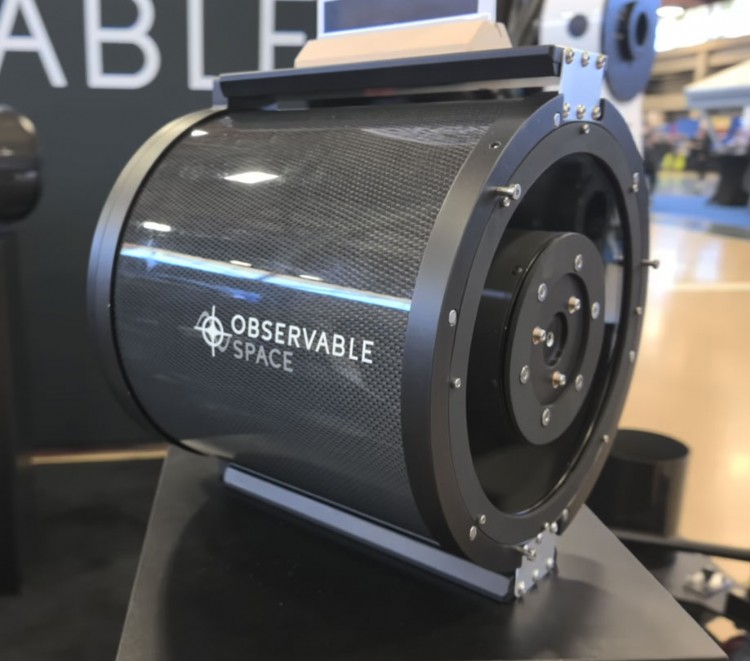
Observable Space, formerly PlaneWave Instruments, also had some noteworthy hardware. Their compact fast wide field systems look like attempts to bring some of their design philosophy into a more attainable range for advanced amateurs. When a company with that background starts paying closer attention to portability and price point, it usually means they see a real shift in demand.
What else was at NEAF this year?
Beyond the big product announcements, there was a strong showing from a wide range of companies that are just as much a part of the hobby.
Camera Concepts and Telescope was there in a big way, with what felt like a full team on the floor. Easily a dozen people moving around, talking to customers, answering questions, and just being present. That kind of engagement matters, especially for folks trying to make real buying decisions.
Celestial Buddies had their booth set up as well, showing off their plush astronomy themed toys. It’s a lighter side of the hobby, but it plays a role. Not everything has to be about specs and sensors. Sometimes it’s about getting people interested in the first place.
Slooh was there representing the remote observing side of astronomy. That’s another piece of the puzzle that keeps growing, especially for people who don’t have access to dark skies or the time to set up their own gear.
QHYCCD had a solid presence with a range of their cameras on display, and yes, they were handing out hats, which never hurts. It’s always good to see their hardware up close, especially for those comparing options in that space.
iOptron showed up with a full lineup of their mounts and scopes, continuing to lean into their reputation for stable, reliable platforms. They also had their newer iAFS focusing unit on display, which is clearly aimed at simplifying autofocus for imaging setups.
Spectrum Optical Instruments brought something a little different with their SPI 127. It’s a smarter telescope concept built around a modular camera system that essentially houses everything needed to run the scope inside the camera itself. That opens the door to easier upgrades and even the possibility of pairing it with different optical tubes, which is an interesting direction.
Explore Scientific was there with a mix of their Dobsonian telescopes, higher end gear, and eyepieces. They continue to cover a wide range of the market, from visual observers to more advanced users.
And as expected, Daystar Filters was set up outside, right where they should be, showing off their solar equipment under actual sunlight. Solar gear is one of those things you really need to see in action, and they had that covered.
It’s easy to focus on the headline announcements, but shows like NEAF are just as much about seeing the full ecosystem of the hobby in one place. From entry level to advanced, from plush toys to precision optics, it’s all part of the same story.